
The Wines of Pācina
It's difficult to reconstruct when the history of winemaking began at Pacina, as it has passed through countless generations and ownerships from the Etruscans onward, reaching us today. The modern history begins in the 1960s when, with sharecropping and the definitive end of Fattore management, our family began to personally manage the farm. From the time of its purchase in the 1930s, Pacina was the "country house" of our family, who lived in Siena. In 1972, it became the "family home," when Giovanna's father decided to move to Pacina because this was the only way to maintain ownership. Giovanna's father, Enzo, and her mother, Lucia, worked at the university and were pioneers of the environmental movement in Italy. Enzo was a professor of Physical Chemistry and wrote several books that are still considered foundational to the idea of sustainability. So from the first bottles of the new DOC Chianti Colli Senesi in 1967 to the first bottle in 1987, the Pacina red as we know it today, the journey was dictated both by the family's economic needs and by the strong ecological ideas and vision of Giovanna's parents. Lucia, Giovanna's mother, is a biologist and writer, and it was with her that the first bottle of Pācina was born.



Initially, only a portion of the wine was bottled; the rest was sold in bulk, providing the wines of the northern Chianti region with the structure they lacked. Pācina is located on the southern slopes of the Chianti mountains. The soil is the characteristic Siena Tufo, deposited by the Pliocene seas some 5 million years ago. It is predominantly sandy, with silt, clay, and rounded stones (pebbles), the result of the action of the sea waves and the flow of the rivers flowing down from the mountains. The estate is protected to the north by the Chianti mountains but completely open to the sun, light, and winds from the other three quadrants. All this gives the Sangiovese its characteristic tannins and freshness, while also providing body, warmth, and color. It was therefore a different vision of life that inspired the way the company was run, which finally took shape in the 1980s with the idea of bottling a wine with minimal intervention in the cellar, thus respecting the ecosystem and consequently guaranteeing the integrity of the terroir and the wholesomeness of the wine. Thus was born the Pācina 1987, then still Chianti Colli Senesi, the result of selecting grapes from the oldest vines. After a completely natural process in the cellar, it was bottled without the addition of sulfites. The path was clear, and so it was that shortly thereafter, from 1992 onwards, Giovanna and Stefano pursued the goal of bringing all the Pācina grapes to the point where they could bottle the wine following the spontaneous processes of fermentation and aging. Below are the labels we produce; click on the bottles to learn more!

Pācina
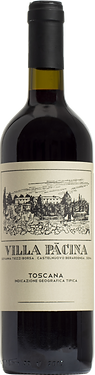
Villa Pacina

La Sorpresa

Donesco

La Cerretina

Canaiolo

La Malena

Rosato
